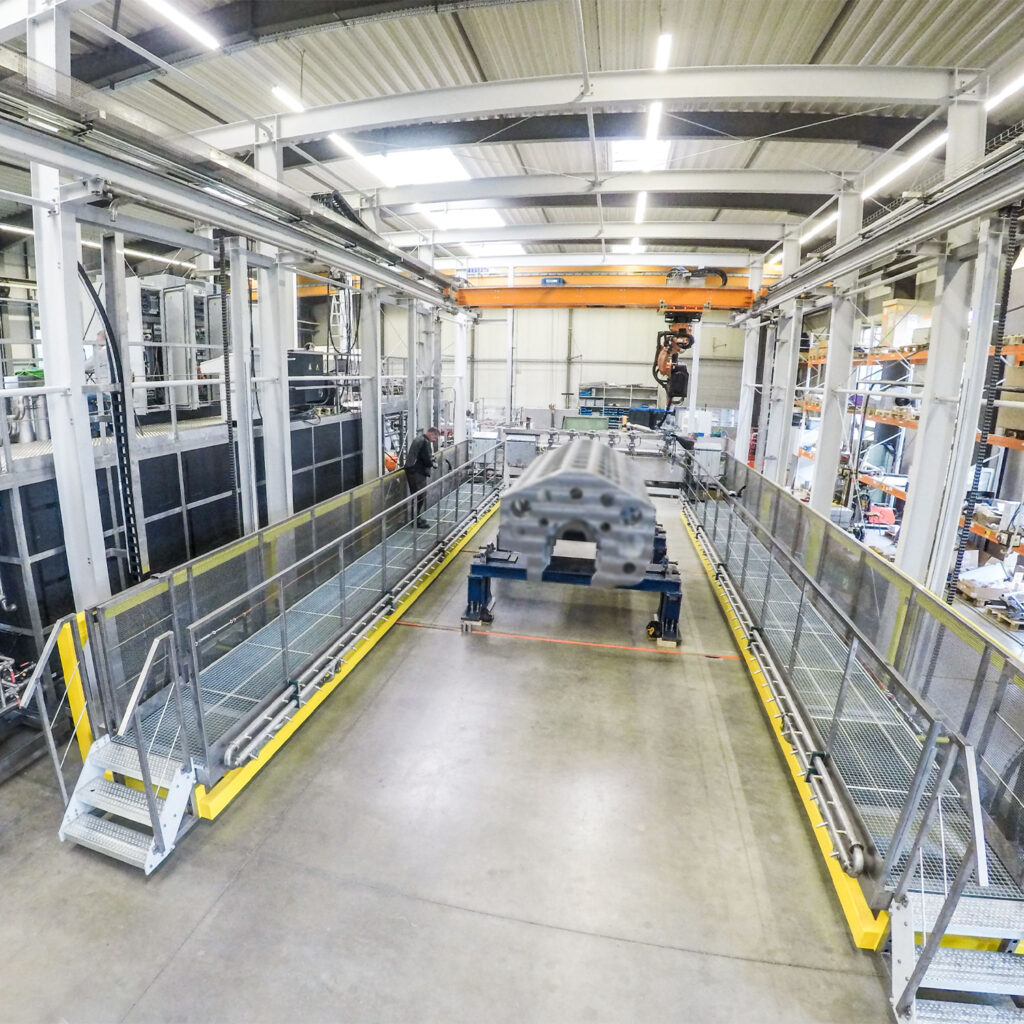
Order: cleaning engine components | Challenge: complex geometries and high cleanliness requirements | Implementation: cleaning line with 4-step cleaning process | Process: immersion cleaning
PURIMA FACILITATES FULLY AUTOMATED CLEANING OF 110-TONNE ENGINE BLOCKS FOR SHIP ENGINES.
Complex workpieces cleaning, rinsing and drying that have a weight comparable to that of an Airbus A350: This was the task faced by parts cleaning specialist PURIMA from Porta Westfalica. For a major customer who, among other things, manufactures engines for the shipping industry, the task was to develop an automated cleaning system that cleans large-dimensioned cylinder crankcases of ship engines fully automatically and efficiently: The housings can weigh up to 110 t. They are manufactured mechanically before you clean them and are contaminated by chips, oils, cooling lubricants or casting dust. Since the large workpieces are geometrically complex, PURIMA faced the challenge of cleaning not only the surfaces but also all recesses and bores with the utmost precision.
The implementation: Fully automatic ROTOTRONIC® spraying system
PURIMA opted for the ROTOTRONIC® system type as it sought to overcome this difficult cleaning challenge. This is a stainless steel system that treats the workpieces along two process steps, basic cleaning with a mobile spray unit and fine cleaning with a robot.
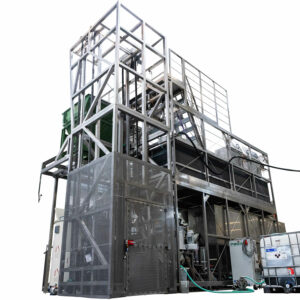
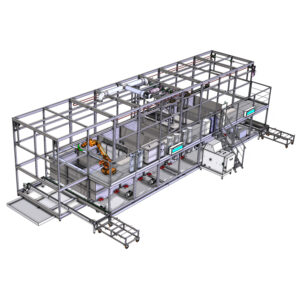
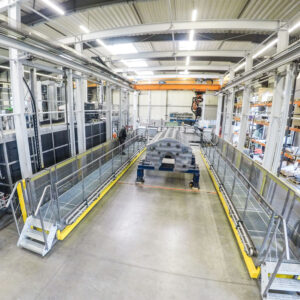
The system is 18,000 mm long x 12,000 mm wide and 6,400 mm high. During the cleaning process, the engine blocks stand on transport trestles to allow cleaning from below. The system is divided into an accessible, maintenance-friendly technical room and a wet room in which the cleaning takes place.
The two-story engineering room houses a comprehensive filtration system that includes a screw conveyor for chip removal, belt bag and cartridge filters, and an oil separator. This system ensures that the cleaning and rinsing medium used in the cleaning process can be recycled. The walk-in, ground-level part of the plant room contains filter technology, chip containers and maintenance rooms. The first floor of the technical room, on the other hand, contains the so-called control room: a control center equipped for the operator and fully air-conditioned, with windows facing the inside of the plant. There, the desired cleaning program can be activated at the push of a button. In addition, bag and cartridge filters are changed at this level.
Crankcase cleaning takes place in the wet area of the plant. Two hydraulically operated working platforms on the long sides of the plant contain the spray coils that become active during basic cleaning. The stages oscillate so that the workpieces can be evenly impacted with the cleaning medium. Adjustable nozzle stacks are also installed at the bottom of the system to ensure that the cylinder crankcases are pressurized from below. For subsequent fine cleaning, a robot is used which is able to operate different cleaning tools, so-called end effectors, in a precise position for cleaning the housings.
The cleaning and rinsing medium that accumulates during the cleaning process flows underneath the system into a catch basin designed for this purpose, where it collects at the lowest point due to gravity. There it is pumped off and transferred to the filtration system. Due to the weight and the catch basin, extensive foundation work was necessary, which was fully planned by PURIMA.
For the safety of the operators, the system is equipped with non-slip gratings. In addition, the control station is equipped with emergency and circuit breakers. Emergency ripcords are also installed inside the system, which can stop the cleaning process at any time, so that employees are just as optimally protected during manual cleaning of the workpieces. The wet room is permanently exhausted and access is controlled by a sensor.
District heating via heat exchangers is used for heating.
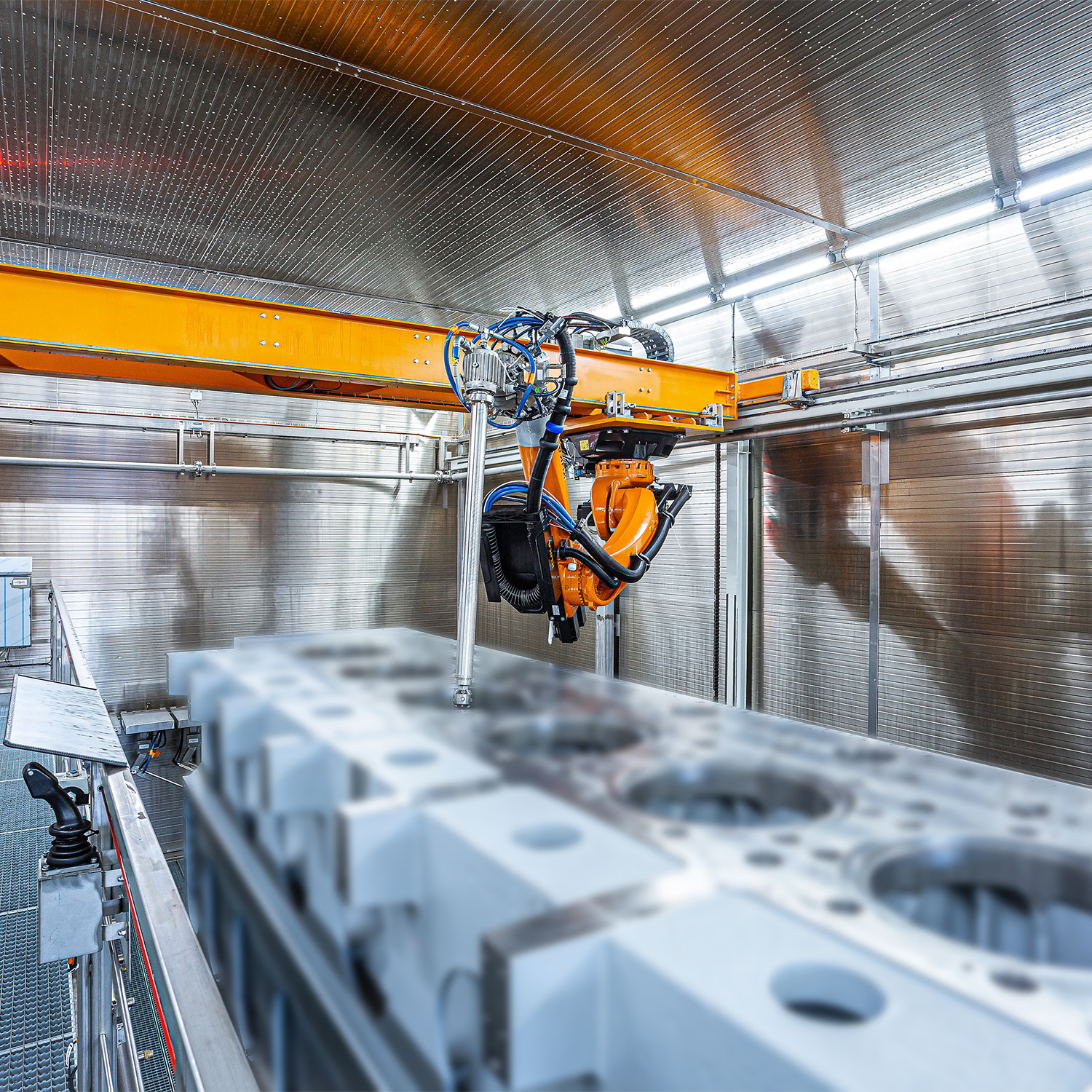
A cylinder crankcase can weigh up to 110 t.
Two cleaning processes as needed for each workpiece
PURIMA’s equipment enables both automated and manual cleaning of cylinder crankcases.
Automated cleaning is intended for newly produced cylinder crankcases, of which 3D CAD data sets are available for offline programming. After the manufacturing process, the housings are delivered through the rolling gate of the plant with the help of transport carts and placed in the exact position on a transport trestle. After the transport vehicle has left the plant, the gate closes and the cleaning process can start. Once the cleaning process has started, the robot first moves over the workpiece and checks it with a triangulation sensor It then transfers the data to the system so that subsequent cleaning programs are optimally and precisely adapted to the workpiece or corresponding bores. Now the basic cleaning begins: In this process, the cleaning medium is applied to the workpiece over its entire surface and at a high volume. The working platforms oscillate in the process so that every spot can be reached. The second step is fine cleaning, in which the robot picks up a total of 5 tools in succession and uses them for cleaning at up to 4000 bar. These have the goal of optimally cleaning and drying all side surfaces, threads and bores. Appropriate tools are also used for the extraction of scooping areas. Once the cleaning process is finished, the cleaned workpiece can be picked up again by a transport vehicle and transported further.
No automated programme can be pre-programmed for engine blocks of other kinds that are coming for maintenance from ongoing operations, or for corresponding components. However, for those customers, PURIMA offers the option of manual cleaning. In the manual method, the work platforms can be moved up to the workpieces using the control panel, and the cleaning medium can be applied in a targeted way using hand lances and hose reels. To ensure work safety, breathing-air connections are provided in the system for the complete protection of employees.
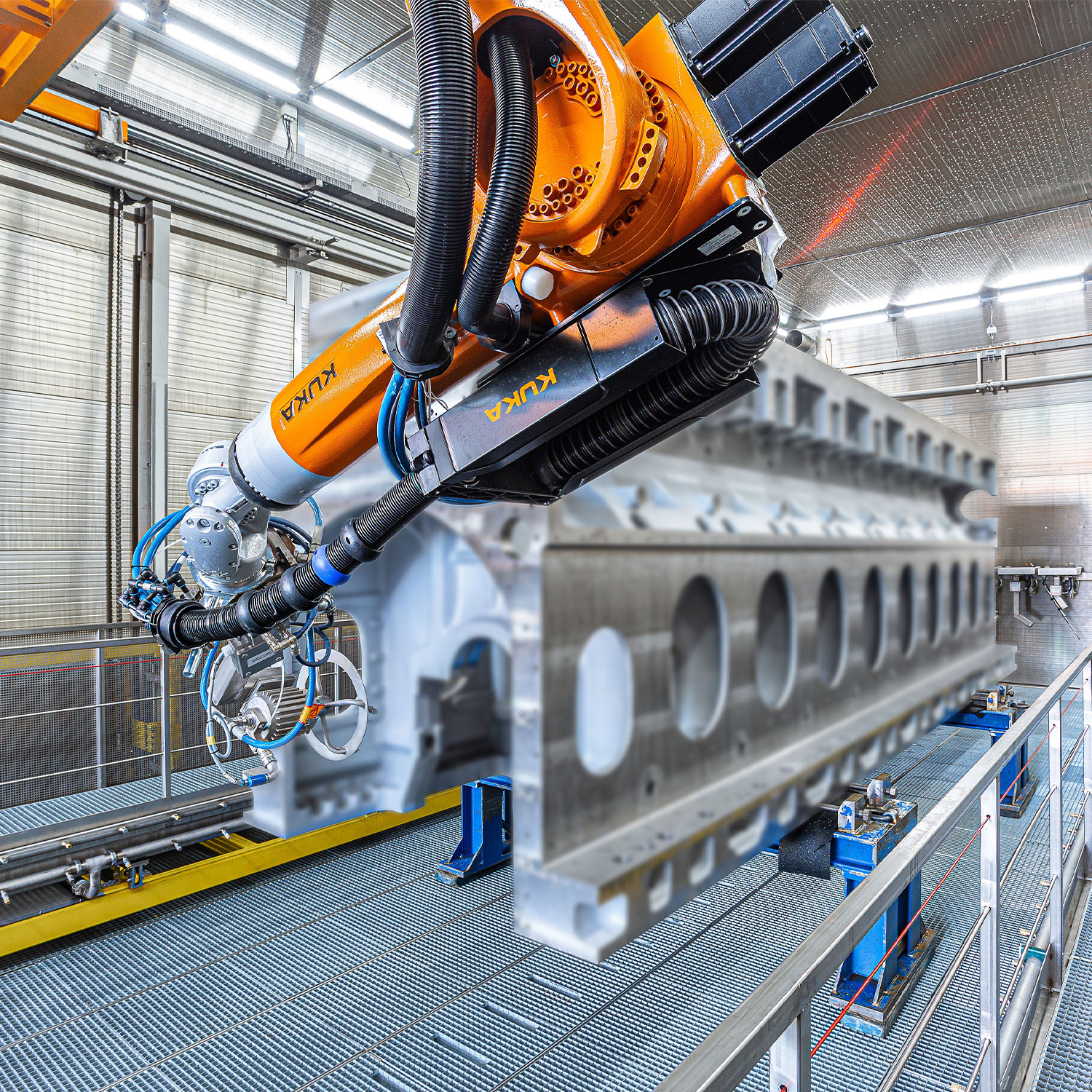
The oscillating working platforms contain spray registers, which Apply flushing medium to the workpiece during basic cleaning.
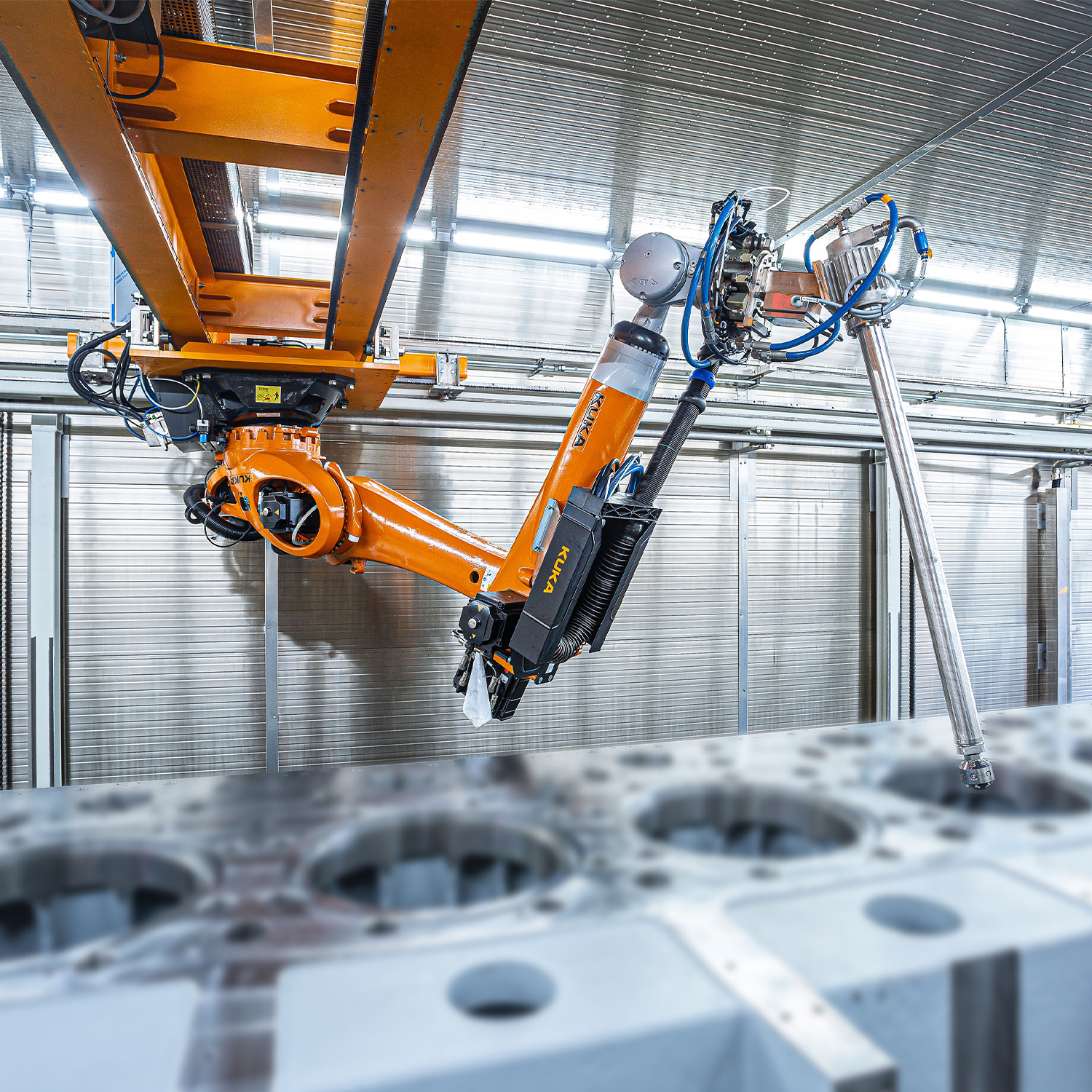
One after the other, the robot picks up tool after tool and performs the fine cleaning.
The result: Detailed large-scale automation offers maximum flexibility
The plant manufactured by PURIMA, which was planned and realized in close cooperation with the customer over a long period of time, is a true masterpiece of the cleaning expert from Porta Westfalica. In terms of area, ROTOTRONIC® is not only one of the most largest cleaning systems that the company has built to date, not least due to the large-dimension workpieces, but is also characterized by technical know-how that is matched with great precision to the customer’s needs and workpieces. As requested, the plant was seamlessly integrated into the customer’s factory infrastructure and is frost-proof. From the control station, operators can trigger workpiece-specific automation at the push of a button, which is able to clean and dry cylinder crankcases of various sizes professionally and with millimeter precision in the specified cycle time. Maintenance of the plant is also user-friendly: fast and safe access to all filter systems is guaranteed, as is the safety of all operators thanks to appropriate emergency precautions. To make the contaminated water from the cleaning process usable again, it is collected at the bottom of the plant and professionally treated for new cleaning runs. When designing the system, PURIMA also took into account workpieces that are maintained for service purposes from ongoing ship operations. Although only manual cleaning can be considered here, PURIMA has deliberately equipped the work platforms so that they can be moved as close as possible to the workpieces by control and operators can start the cleaning process there with appropriate special tools.
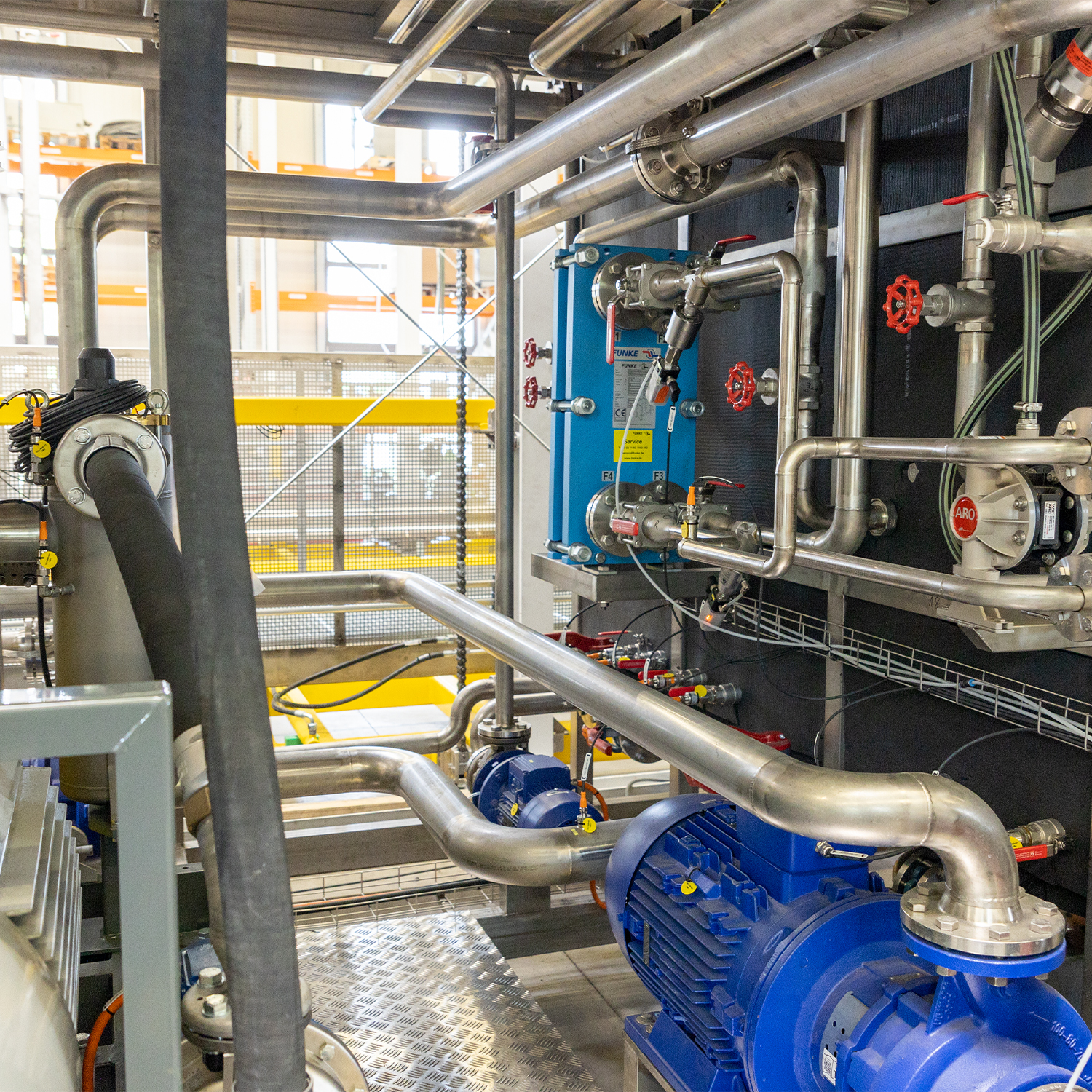
Maintainable, efficient and safe to walk on: pumps and maintenance rooms in the walk-on ground level part of the ROTOTRONIC®.
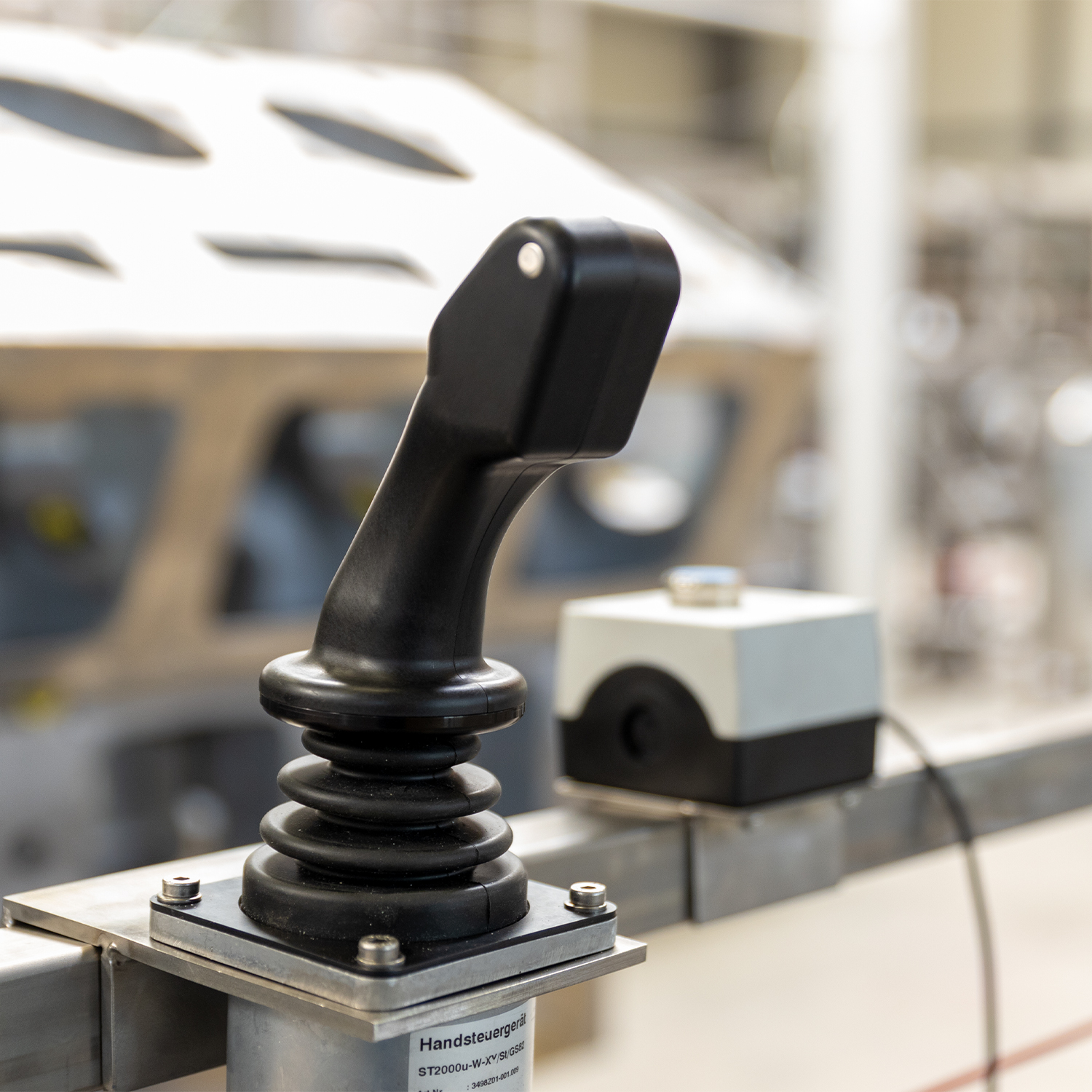
Control of the working platform during manual cleaning: The workpiece can be approached as required via joystick.